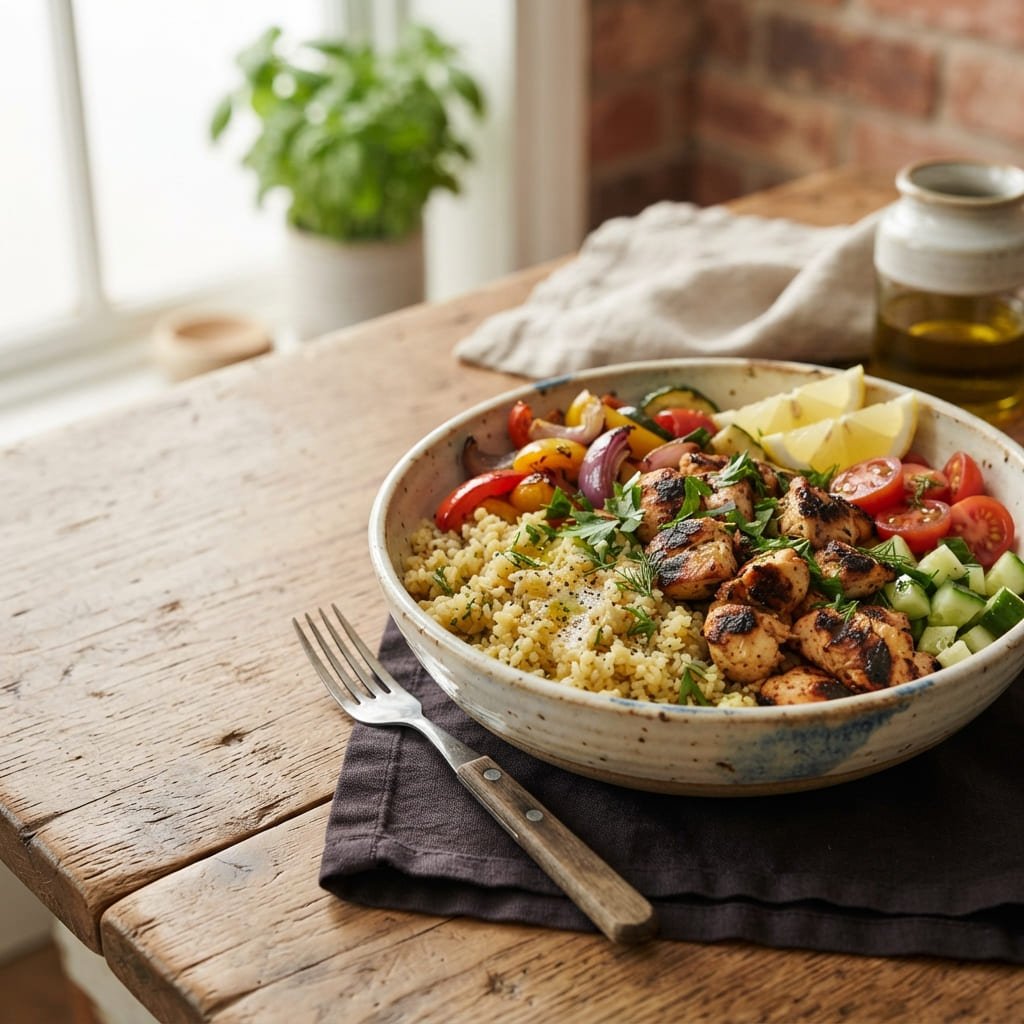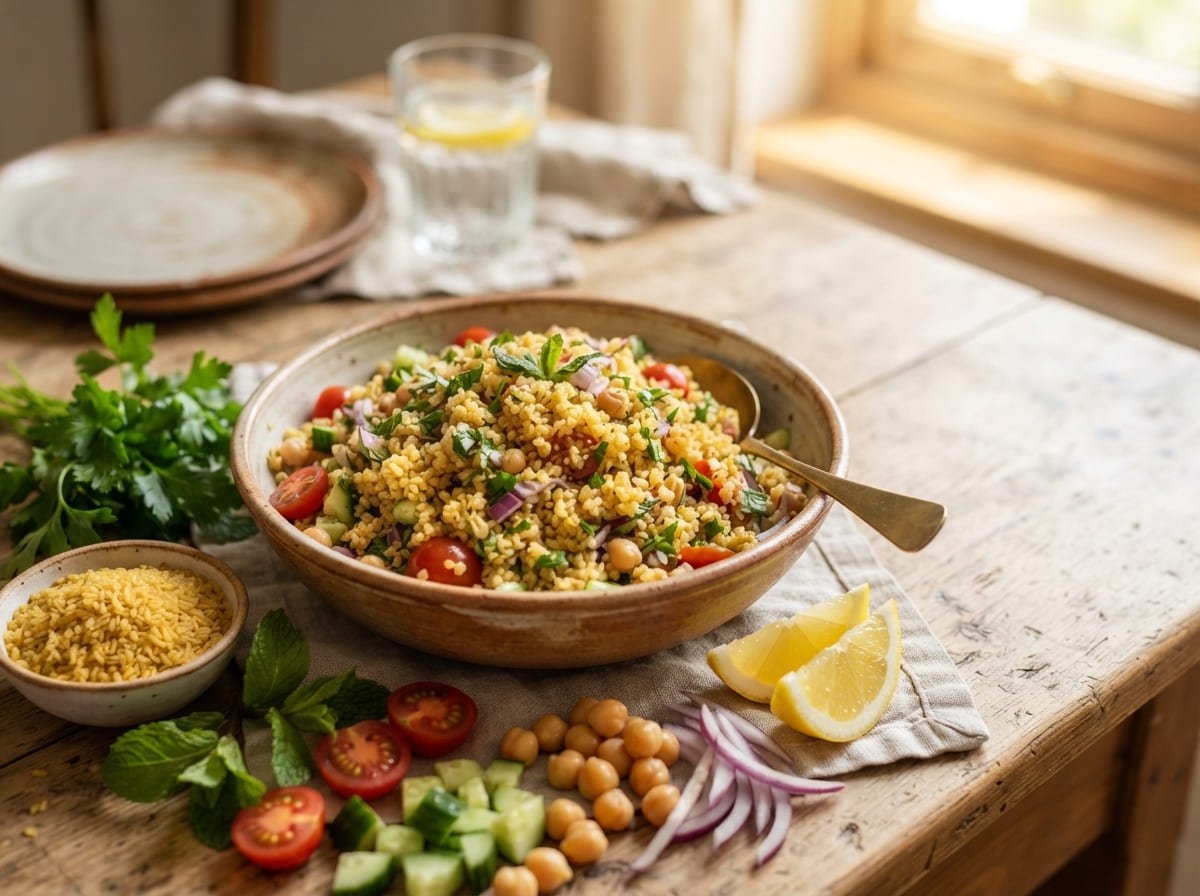
Bowl of cooked bulgur wheat with fresh Mediterranean ingredients

What Is Bulgur recipes?

If you’ve ever typed “what is bulgur recipes” into a search bar, dishes like tabbouleh and steaming pilafs probably led you here. Bulgur is a quick-cooking whole grain made from parboiled durum wheat, and it has anchored Mediterranean and Middle Eastern tables for thousands of years. Still, plenty of home cooks walk right past it in the store.
 
Their loss. Bulgur is affordable, genuinely healthy, and easy to cook once you understand the grinds and the liquid ratio. This guide answers the big questions — what is bulgur wheat, what is it made of, is it good for you, and how do you cook it so it’s light and nutty instead of mushy — and it points you to plenty of healthy bulgur recipes to try first.
 
What Is Bulgur Recipes with dry and cooked bulgur wheat, parsley, and lemon
What Is Bulgur Recipes – Dry and Cooked Bulgur Wheat
 

What Is Bulgur Wheat and What Is Bulgur Made Of?

Bulgur is whole durum wheat that has been cleaned, parboiled, dried, and cracked into small pieces. That’s the entire ingredient list: wheat. Nothing else is added.
 
Many home cooks type “what is bulgur recipes” into Google because they want to know how to use this grain in their daily meals, but understanding the ingredient itself is the first step. Because the grain is parboiled before it’s cracked, bulgur is partially cooked from the moment you buy it. That’s why it simmers up in about 15 minutes while raw wheat berries can take close to an hour. It’s also why fine bulgur only needs a soak in hot water to soften.
 
If you’ve also wondered what is bulgur made from, the answer stays the same: parboiled whole wheat, nothing more. And unlike couscous, which is a pasta made from semolina flour, bulgur is a true whole grain — bran, germ, and endosperm all included. More on that comparison later.
 
You’ll also see it spelled bulghur or burghul, and sometimes labeled cracked wheat. The first two are just spelling variations. Cracked wheat is technically a different product, which we’ll clear up below.
 

How Is Bulgur Made?

Bulgur is made by parboiling whole wheat berries, drying them, and cracking them into uniform pieces. The traditional process follows four steps:
 
  1. Cleaning. Whole durum wheat kernels are washed and sorted to remove debris and broken kernels.
  2. Parboiling. The cleaned wheat is partially boiled or steamed. This precooks the starch, drives some of the bran’s nutrients deeper into the kernel, and creates bulgur’s signature nutty flavor.
  3. Drying. The parboiled wheat is dried until hard and shelf-stable.
  4. Cracking or milling. The dried kernels are cracked, then sifted into grinds ranging from fine to extra coarse.
 
Since the whole kernel is used, bulgur keeps all three parts of the grain — bran, germ, and endosperm — which is exactly what makes it a whole grain. The parboiling step is what separates bulgur from plain cracked wheat, and what saves you so much time at the stove.
 
What Is Bulgur Recipes showing wheat berries, parboiled wheat, and finished cracked bulgur
How bulgur is made from whole wheat berries through parboiling, drying, and cracking.
 

Is Bulgur Healthy? Bulgur Nutrition and Benefits

Yes, bulgur is a genuinely healthy whole grain. It’s low in fat, high in dietary fiber, and a good source of plant-based protein and minerals like manganese, magnesium, and iron — a natural fit for a Mediterranean diet style of eating.
 

Bulgur Nutrition Facts

 
Nutrient
Per 1 Cup Cooked (≈182 g)
Calories
151
Carbohydrates
34 g
Dietary fiber
8 g
Protein
5.6 g
Fat
0.4 g
Manganese
~1.1 mg (about half your daily value)
Magnesium
~58 mg (about 14% DV)
Iron
~1.7 mg (about 10% DV)
Values are rounded USDA figures and can vary slightly by brand.
 

Health Benefits of Bulgur

  • Fiber-rich. Around 8 grams of dietary fiber per cooked cup, which supports digestion and helps you feel full. Most Americans fall far short on fiber.
  • Whole grain, not refined. Bulgur keeps the bran and germ, so you’re eating complex carbohydrates instead of the refined grains found in white rice and white bread.
  • Meaningful minerals. Manganese, magnesium, and iron all show up in useful amounts.
  • Plant-based protein. Roughly 6 grams per cup, helpful for vegetarian and vegan plates.
  • Budget friendly. Pound for pound, bulgur is one of the cheapest healthy staples in the supermarket.
 
One honest caveat: bulgur is wheat, so it contains gluten and isn’t suitable for anyone with celiac disease or gluten sensitivity. And no single food works miracles — bulgur earns its keep as part of a varied, vegetable-forward plate, not as a cure-all.
 
How bulgur is made from whole wheat berries through parboiling, drying, and cracking.
 

Bulgur vs Quinoa: Which Is Better?

Neither wins across the board. Bulgur takes the fiber, price, and chew; quinoa takes the gluten-free and complete-protein crowns. Here’s the side-by-side:


Bulgur
Quinoa
What it is
Parboiled cracked wheat
Seed of the quinoa plant
Calories (1 cup cooked)
~151
~222
Protein
~5.6 g
~8 g
Fiber
~8 g
~5 g
Gluten
Contains gluten
Naturally gluten-free
Complete protein
No
Yes
Flavor & texture
Nutty, chewy
Mild, soft with a slight pop
Cook time
10–20 min (or soak)
~15 min
Typical cost
Usually cheaper
Usually pricier
The practical takeaway: if you eat gluten, bulgur is a fiber-packed everyday grain that’s kind to your grocery bill. If you’re gluten-free, or cooking for vegans who want a complete protein, quinoa is the smarter pick. Plenty of kitchens simply keep both on hand.
 

Bulgur vs Couscous: What’s the Difference?

They sit near each other in the aisle and look similar in the pot, but they’re different products:
 
  • What they’re made from: Bulgur is cracked whole wheat. Couscous is tiny pasta rolled from semolina flour and water.
  • Processing: Bulgur is parboiled, dried, and cracked. Couscous is formed from moistened flour into granules, then dried.
  • Texture: Bulgur is chewy with distinct grains; couscous is softer and more pillowy.
  • Fiber: Bulgur carries roughly three times the fiber of regular couscous per cup.
  • Cooking: Couscous steeps in hot water for about 5 minutes; bulgur simmers or soaks a little longer.
  • Typical uses: Couscous shines in North African tagines and quick sides. Bulgur is the grain behind tabbouleh, kibbeh, and Mediterranean pilafs.
 
One thing they share: both are wheat, so neither belongs on a gluten-free table.
 

Bulgur vs Cracked Wheat

This is the most common mix-up, and it’s an honest one — bulgur is a type of cracked wheat, but not all cracked wheat is bulgur.
 
Plain cracked wheat is raw wheat berries chopped into pieces, with no parboiling. That means it cooks like a raw grain, often 45 minutes to an hour, with a firmer, starchier bite. Bulgur, having been parboiled, cooks in a fraction of the time and carries that toasty, nutty flavor.
 
If a recipe calls for bulgur and you only have raw cracked wheat, plan on a longer simmer and more liquid — or save the cracked wheat for slow-cooked porridges and hearty breads.
 
What Is Bulgur Recipes showing fine, medium, coarse, and extra coarse bulgur
Fine, medium, coarse, and extra coarse bulgur showing the different grain sizes.
 

Different Types of Bulgur

Bulgur is sold in four main grinds, roughly #1 (fine) through #4 (extra coarse). The grind changes the texture, the cook time, and the best use, so matching grind to recipe is half the battle. When you are browsing for “what is bulgur recipes” to make, knowing your grinds is essential.
 

Fine Bulgur

  • Texture: Small grains that soften quickly; tender with a light bite.
  • Best uses: Tabbouleh, kibbeh, cold salads, and stuffings where the grain should bind.
  • Cooking method: Usually no boiling needed — just cover with boiling liquid and soak.
  • Typical recipes: Classic tabbouleh, breakfast porridge, stuffed vegetable fillings.
 

Medium Bulgur

  • Texture: Light and fluffy with a pleasant chew; the most versatile grind.
  • Best uses: Everyday side dishes, grain bowls, and hearty salads.
  • Cooking method: Simmer 10–12 minutes, then rest off the heat.
  • Typical recipes: Bulgur pilaf, weeknight grain bowls, Mediterranean salads.
 

Coarse Bulgur

  • Texture: Chunkier, with a sturdy, satisfying chew.
  • Best uses: Pilafs, hot sides, and soups where the grain must hold its shape.
  • Cooking method: Simmer 15–20 minutes; rest before fluffing.
  • Typical recipes: Mushroom bulgur pilaf, bulgur and lentil soup, sides for braised meats.
 

Extra Coarse Bulgur

  • Texture: The largest pieces; chewy and substantial, closest to wheat berries.
  • Best uses: Rustic pilafs, stews, and stuffings that need real texture.
  • Cooking method: Simmer 20–25 minutes, or follow the package.
  • Typical recipes: Baked pilaf with caramelized onions, stuffed squash, stew-style dishes.
 
When in doubt, medium bulgur is the safest all-purpose choice, and it’s the grind most American supermarkets stock.
 

How to Cook Bulgur Perfectly Every Time

Cooking bulgur is closer to cooking rice than cooking pasta: measure your liquid, keep the lid on, and let it rest. Two methods cover almost every situation. Once you know the basics, you’ll easily navigate the results for “what is bulgur recipes” and pick the right technique for your pot.
 

Stovetop Method (Medium & Coarse Bulgur)

  1. Optionally rinse the bulgur; it’s not required, but it helps keep grains separate.
  2. Combine 1 cup bulgur, 2 cups water or broth, and a good pinch of salt in a saucepan.
  3. Bring to a boil, then reduce to a low simmer and cover.
  4. Cook 10–12 minutes for medium grind, 15–20 minutes for coarse, until the liquid is absorbed.
  5. Remove from heat and rest, covered, for 5–10 minutes.
  6. Fluff with a fork, then finish with a drizzle of olive oil or a squeeze of lemon juice if you like.
 

Soaking Method for Fine Bulgur

  1. Put 1 cup fine bulgur and a pinch of salt in a heatproof bowl.
  2. Pour over 1½ cups boiling water or broth and cover tightly.
  3. Let stand 20–30 minutes, until tender.
  4. Fluff with a fork and drain any leftover liquid if the bowl looks wet.
 
A note on ratios: 1 part bulgur to 2 parts liquid is a reliable starting point for simmering, and 1 to 1½ works for soaking fine bulgur. If you prefer a drier, more separate grain, trim the liquid slightly and let the resting period do the finishing work.
 
What Is Bulgur Recipes - How to Soak Fine Bulgur
Fine bulgur soaking in boiling water until tender and fluffy.
 

How to Use Bulgur

Here’s how to use bulgur across the whole week. Once cooked, it’s a neutral, nutty base that soaks up dressings, broths, and spices beautifully. If your search for “what is bulgur recipes” is driven by meal prep needs, cooked bulgur holds up beautifully in the fridge.
 

Bulgur Salads

Cold bulgur salads are the classic introduction to the grain. Toss medium or fine bulgur with chopped cucumber, tomatoes, parsley, mint, lemon, and olive oil for a tabbouleh-style salad, or bulk it up with chickpeas and feta. Browse our [Bulgur Salads] collection for fresh ideas.
 

Bulgur Pilaf

A pilaf is simply bulgur cooked with aromatics — think onion, garlic, and spices — then finished in broth. It’s the easiest upgrade from a plain steamed grain. Start with our [Bulgur Pilaf] recipes.
 

Vegetarian Bulgur Recipes

Bulgur and plant-based cooking are natural partners. Pair it with lentils, chickpeas, roasted vegetables, and herbs for satisfying meatless mains. See our [Vegetarian Bulgur Recipes].
 

Healthy Bulgur Recipes

If you’re cooking bulgur for the health benefits, keep the plate vibrant: lots of vegetables, good olive oil, lean protein, and citrus. Our [Healthy Bulgur Recipes] round up lighter bowls and salads.
 

Easy Weeknight Bulgur Recipes

Because medium bulgur cooks in about 15 minutes, it’s a legitimate weeknight staple. Stir it into skillet dishes, “fried rice” style bowls, or one-pan vegetable medleys. The [Easy Bulgur Recipes] collection is built for fast dinners.
 

Mediterranean Bulgur Recipes

Bulgur sits at the heart of Mediterranean and Middle Eastern cuisine, from tabbouleh to mujaddara-style bowls of bulgur, lentils, and caramelized onions. Explore our [Mediterranean Recipes] for that flavor profile.
 

Bulgur for Dinner

Treat bulgur like rice or farro at dinner: a base under curries, grilled chicken, or roasted salmon, or baked into casseroles and stuffed vegetables. More ideas live in [Dinner Recipes].
 

Bulgur as a Side Dish

The simplest move is swapping bulgur in anywhere you’d serve white rice, brown rice, or couscous. A squeeze of lemon and a handful of parsley turn it into a side worth building the plate around; see [Side Dishes] for pairing ideas.
 

Bulgur for Meal Prep

Cooked bulgur holds up beautifully in the fridge, which makes bulgur meal prep almost effortless. Cook a big batch on Sunday and spin it into salads, bowls, and sides all week. Our [Meal Prep] guide has the full workflow.
 
What Is Bulgur Recipes with cooked bulgur meal prep containers and Mediterranean dishes
Cooked bulgur prepared for easy meal prep with tabbouleh, pilaf, and ready-to-go meal containers.
 

Expert Tips for Perfect Bulgur

These expert tips will elevate your cooking, ensuring that the dishes from the “what is bulgur recipes” searches you find online turn out perfectly every time:
 
  • Toast it first. A couple of minutes in a little olive oil or butter deepens the nutty flavor — the same trick you’d use with rice or quinoa.
  • Cook in broth. Swapping water for vegetable or chicken broth is the easiest way to add flavor with zero extra effort.
  • Season the liquid. Bulgur cooked in plain, unsalted water tastes like very little. Salt the cooking liquid the way you’d salt pasta water, just a touch lighter.
  • Bloom your spices. Stirring cumin, coriander, or a pinch of cinnamon into the hot fat for 30 seconds before adding the grain wakes the spices up.
  • Match the grind to the dish. Fine for salads and soaking, medium for everyday sides, coarse and extra coarse for pilafs and soups.
  • Let it rest. The 5–10 minutes off the heat, lid on, is when the grains firm up and turn fluffy. For the best texture, don’t skip it.
  • Finish with olive oil and lemon. A small drizzle and a squeeze of lemon right before serving brightens everything. Very Mediterranean, very effective.
  • Cool it flat. For meal prep, spread cooked bulgur on a tray so it cools quickly and the grains stay separate instead of steaming into a block.
 

Common Mistakes to Avoid When Cooking Bulgur

  • Choosing the wrong grind. Fine bulgur in a pilaf turns mushy; extra coarse in tabbouleh stays stubbornly chewy. Check the recipe and match the grind — medium is the safe default.
  • Using too much liquid. Extra water doesn’t make bulgur softer; it makes it soggy. Stick to 1:2 for simmering and 1:1½ for soaking.
  • Overcooking. Bulgur keeps absorbing liquid as long as it’s on the heat. Pull the pan when the liquid is just absorbed — residual heat finishes the job.
  • Removing the lid too early. Every peek releases steam and slows the cook. Set a timer and leave it alone.
  • Skipping the resting period. Resting redistributes moisture and firms up the texture. Give it 5–10 minutes, covered.
  • Boiling fine bulgur like rice. Fine bulgur is happiest soaked in hot liquid; boiling it vigorously usually ends in porridge.
  • Cooking in unseasoned liquid. Bland in, bland out. A good pinch of salt in the pot makes a noticeable difference.
 

How to Flavor Bulgur

Bulgur is a canvas, and it takes kindly to bold Mediterranean and Middle Eastern flavors. A few combinations that work well:
 
  • Garlic + tomato paste: Cook a spoonful of tomato paste with minced garlic in olive oil until it darkens slightly, then add the bulgur and liquid for a rich, savory base.
  • Cumin + coriander: Bloom both in the fat before simmering for a warm, earthy profile that loves chickpeas.
  • Cinnamon + cardamom: A light pinch of each steers bulgur toward pilaf territory, great alongside lamb or chicken.
  • Fresh herbs: Parsley, mint, and dill stirred in at the end keep everything bright.
  • Lemon + olive oil: The classic finish; a little zest adds even more perfume.
  • Broth + caramelized onions: Slow-browned onions plus broth give you a deeply savory pilaf with almost no active time.
 

How to Store and Reheat Bulgur

Refrigeration

Cool cooked bulgur within a couple of hours of cooking, then store it in an airtight container in the refrigerator for 3 to 4 days.
 

Freezing

Bulgur freezes well. Portion it into freezer bags or containers, press out as much air as you can, and freeze for up to 3 months. Thaw overnight in the fridge.
 

Reheating

Warm bulgur in the microwave with a splash of water, or in a saucepan over low heat, fluffing with a fork. Straight from the fridge, it’s also fine tossed cold into salads and grain bowls.
 

Meal Prep Tips

Cook a plain batch once or twice a week and flavor it differently each day — herbs and lemon on Monday, cumin and chickpeas on Tuesday. Keep dressings and juicy vegetables separate until serving so salads stay crisp.
 
What Is Bulgur Recipes with bulgur meal prep containers, roasted vegetables, and fresh herbs
Glass meal-prep containers layered with cooked bulgur, roasted vegetables, and fresh herbs for easy weekly meals.
 

Frequently Asked Questions

What is bulgur made of?

Bulgur is made from whole durum wheat kernels that are parboiled, dried, and cracked. The only ingredient is wheat.
 

What is the difference between bulgur and cracked wheat?

Cracked wheat is raw, uncooked wheat berries that have been chopped. Bulgur is cracked wheat that has been parboiled first, so it cooks much faster and has a nuttier flavor.
 

Is bulgur gluten-free?

No. Bulgur is wheat, so it contains gluten and isn’t suitable for people with celiac disease or gluten intolerance. Quinoa, rice, and certified gluten-free grains are better swaps.
 

Is bulgur healthy?

Yes. Bulgur is a whole grain that’s high in fiber and a good source of plant-based protein, manganese, magnesium, and iron. It’s a smart stand-in for refined grains like white rice.
 

Can I substitute bulgur for rice?

Usually, yes. Bulgur works in pilafs, stir-fries, stuffed peppers, and grain bowls where you’d use rice. Just note it cooks faster than brown rice and has a chewier, nuttier bite.
 

What is the difference between bulgur and couscous?

Bulgur is cracked whole wheat; couscous is a small pasta made from semolina flour. Bulgur is chewier and higher in fiber, while couscous is softer and cooks a little faster.
 

Can you eat bulgur without boiling it?

Fine bulgur, yes. It’s already parboiled, so soaking in boiling liquid softens it fully — that’s how tabbouleh is often made. Coarser grinds are better simmered.
 

Why is my bulgur mushy?

Usually too much liquid, too long on the heat, or fine bulgur used where a coarser grind was intended. Measure the liquid, watch the clock, and let it rest instead of stirring.
 

How long does cooked bulgur last?

In an airtight container in the refrigerator, 3 to 4 days.
 

Can you freeze cooked bulgur?

Yes. Freeze it in portions for up to 3 months and thaw in the refrigerator before reheating with a splash of water.
 

What is bulgur recipes?

While the exact search phrase “what is bulgur recipes” is a common grammatical mix-up, it simply means you are looking for ways to cook and use bulgur wheat in everyday meals, from tabbouleh to hearty pilafs.
 

Final Thoughts: What Is Bulgur, Really?

Bulgur is parboiled, cracked whole durum wheat — a quick-cooking, fiber-rich whole grain with a nutty flavor and deep roots in Mediterranean cooking. Once you know your grinds, your liquid ratio, and the value of a good rest, it becomes one of the easiest healthy staples you can keep in the pantry.
 
You no longer need to type “what is bulgur recipes” into your browser to figure out how to use this grain. Start simple: a medium-grind pilaf or a lemony tabbouleh. Then branch out into healthy bulgur recipes for meal prep, dinners, and sides. If you’ve been wondering what is bulgur and whether it deserves a spot in your kitchen, this is your sign to put a pot on the stove this week.

Leave a Reply

Your email address will not be published. Required fields are marked *